How to Clean Engraved Wood
Dust engraved wood dry with a microfiber cloth about once a month, and use a barely damp cloth only when something has marked the surface. Never let water stand on the wood. Painted details and food-touching kitchen pieces each get their own routine.
The routine that keeps burn lines crisp and painted details intact, from wall signs to the rolling pin that gets floured. It takes minutes. Standing water is the one real danger.
Why does engraved wood need different care than plain wood?
Engraved wood needs gentler care because dust and residue collect in the recessed lettering, and the wrong cleaner dulls the contrast that makes the piece legible. A dry cloth and an occasional soft brush do the job. Sprays and soaking do not.
A laser engraving is a shallow relief. The parts you read are recesses cut below the surface, and the contrast between the darkened cut and the lighter face is what makes the piece legible from across a room. Dust and polish residue collect in exactly those recesses. That's why a sign that gets weekly furniture spray slowly goes flat and muddy, while one that only ever meets a dry cloth still reads sharply.
The second difference is the finish. We finish our display pieces with a matte oil and finish kitchen pieces with food-safe oil. Both handle daily life well. Neither is built for soaking, harsh cleaners, or heat, and no wood finish is.
Can you use water to clean an engraved wood sign?
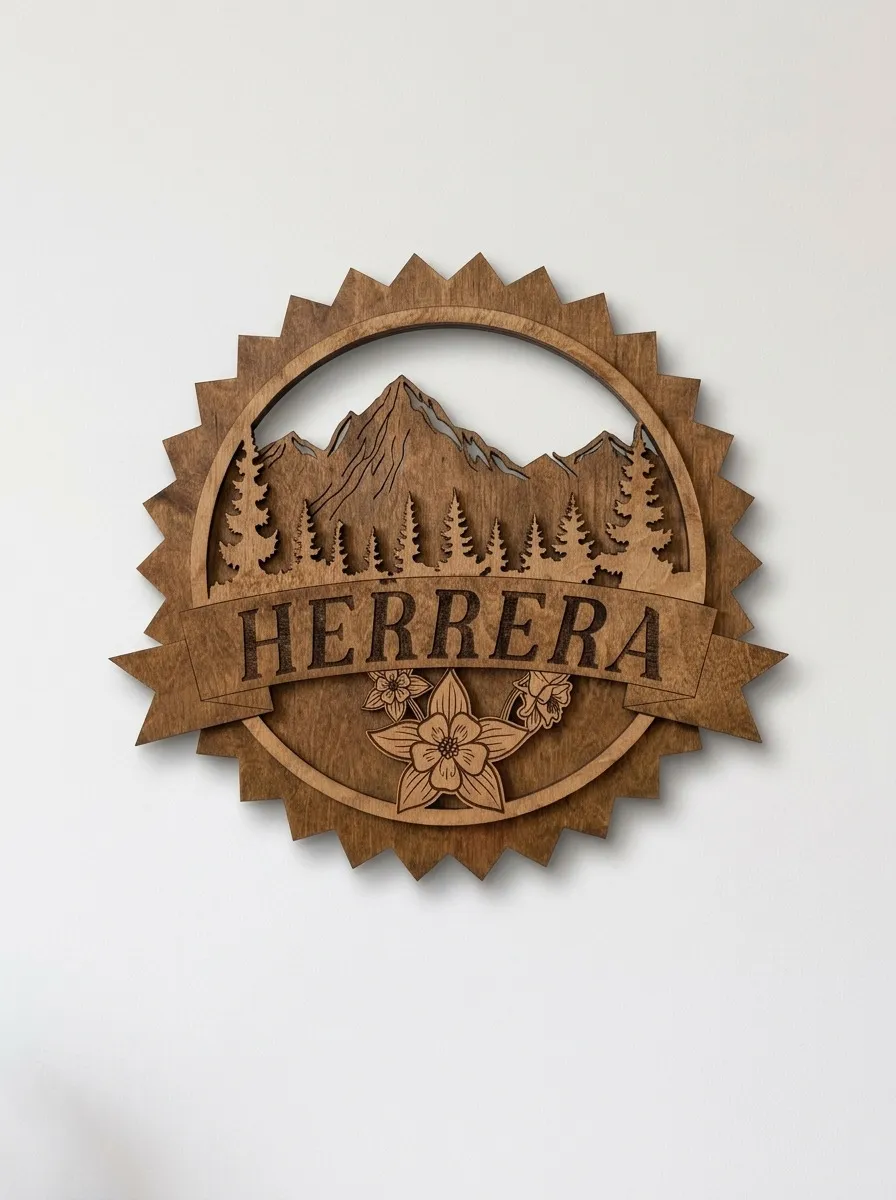
Water is the exception here, not the routine. For a wall piece, the whole job is a dry microfiber cloth along the grain once a month, and a clean, dry paintbrush flicked through the engraved letters when dust settles into them.
When something does mark the surface, fingerprints near a light switch, kitchen film, a toddler discovery, use water only: dampen a cloth, wring it until it stops dripping entirely, wipe in short passes, and dry the surface immediately with a second cloth. Never let water sit on the wood.
Painted details are paint first, wood second
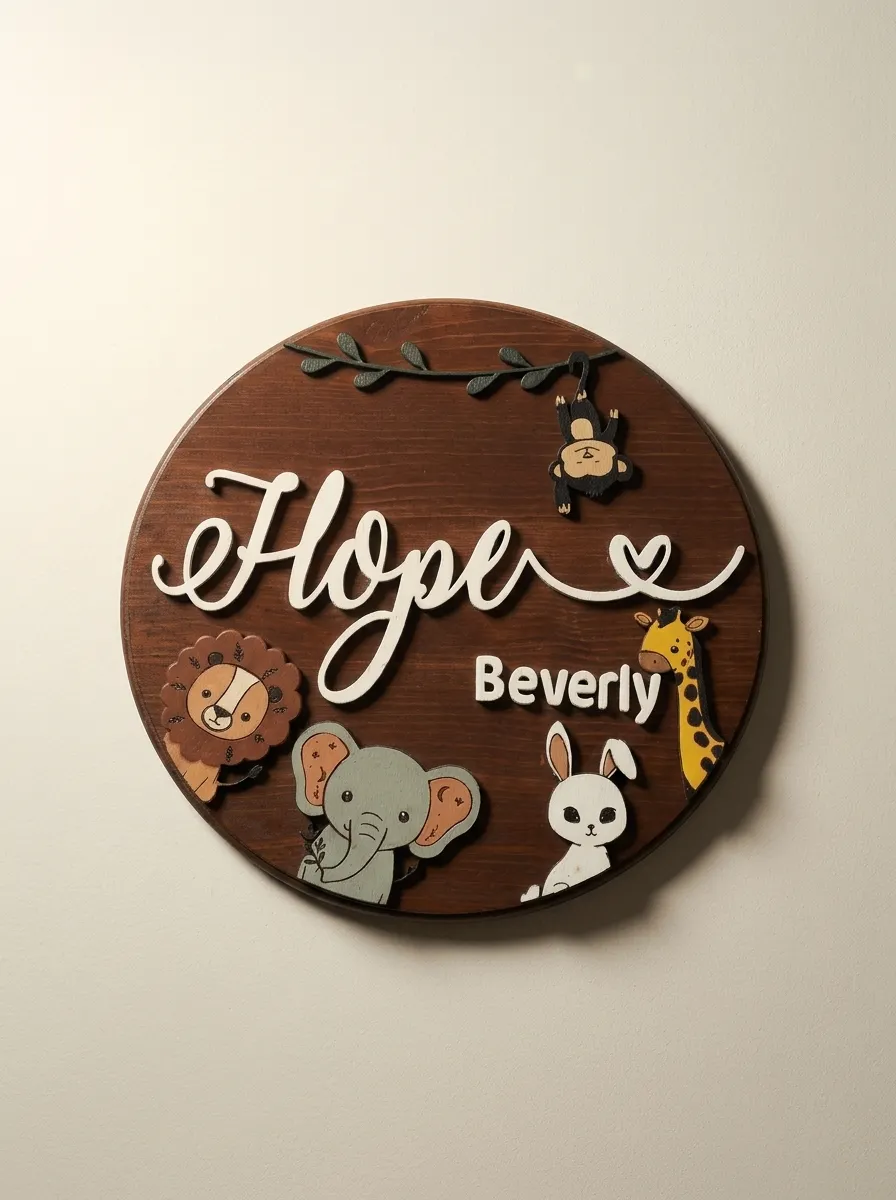
Some of our nursery pieces, like the safari baby name sign, layer hand-painted figures and a painted name over the stained backer. Treat those areas the way you would a painted picture frame: dry dusting only, no rubbing, and keep the piece out of standing moisture and direct sunlight. Over a few summers, direct sun fades paint, and cleaning cannot restore it.
How do you wash an engraved rolling pin or cutting board?
Wash it by hand in warm water right after use, dry it immediately with a towel, and rub in food-safe mineral oil every month or two. Skip the dishwasher and skip long soaks. Both end a wooden kitchen piece early.
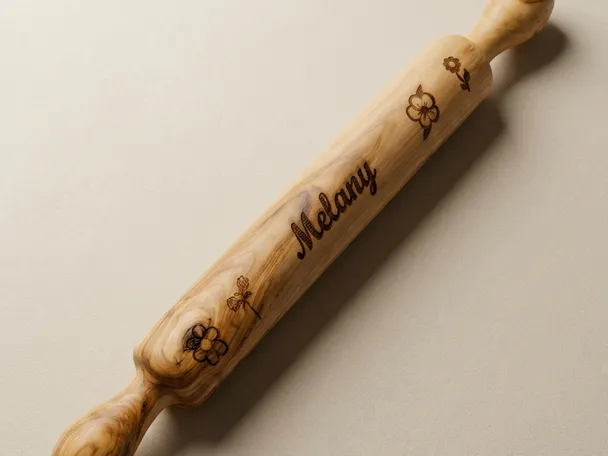
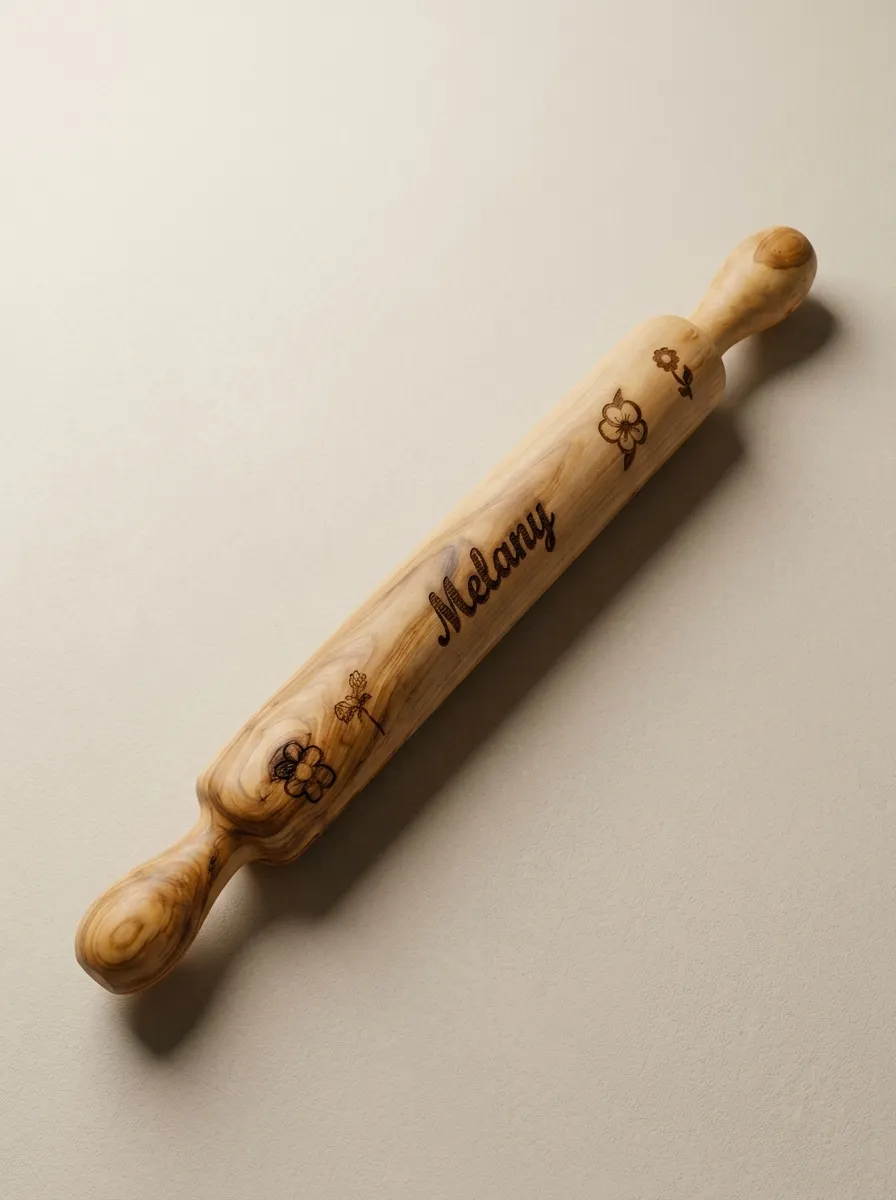
A piece like our wood rolling pin is meant to be used, so its care is closer to a cutting board than a wall sign. After baking: warm water, a quick hand wash, towel dry right away, then let it finish drying upright before it goes back in the drawer. Flour brushes out of the engraved name with the same dry paintbrush trick.
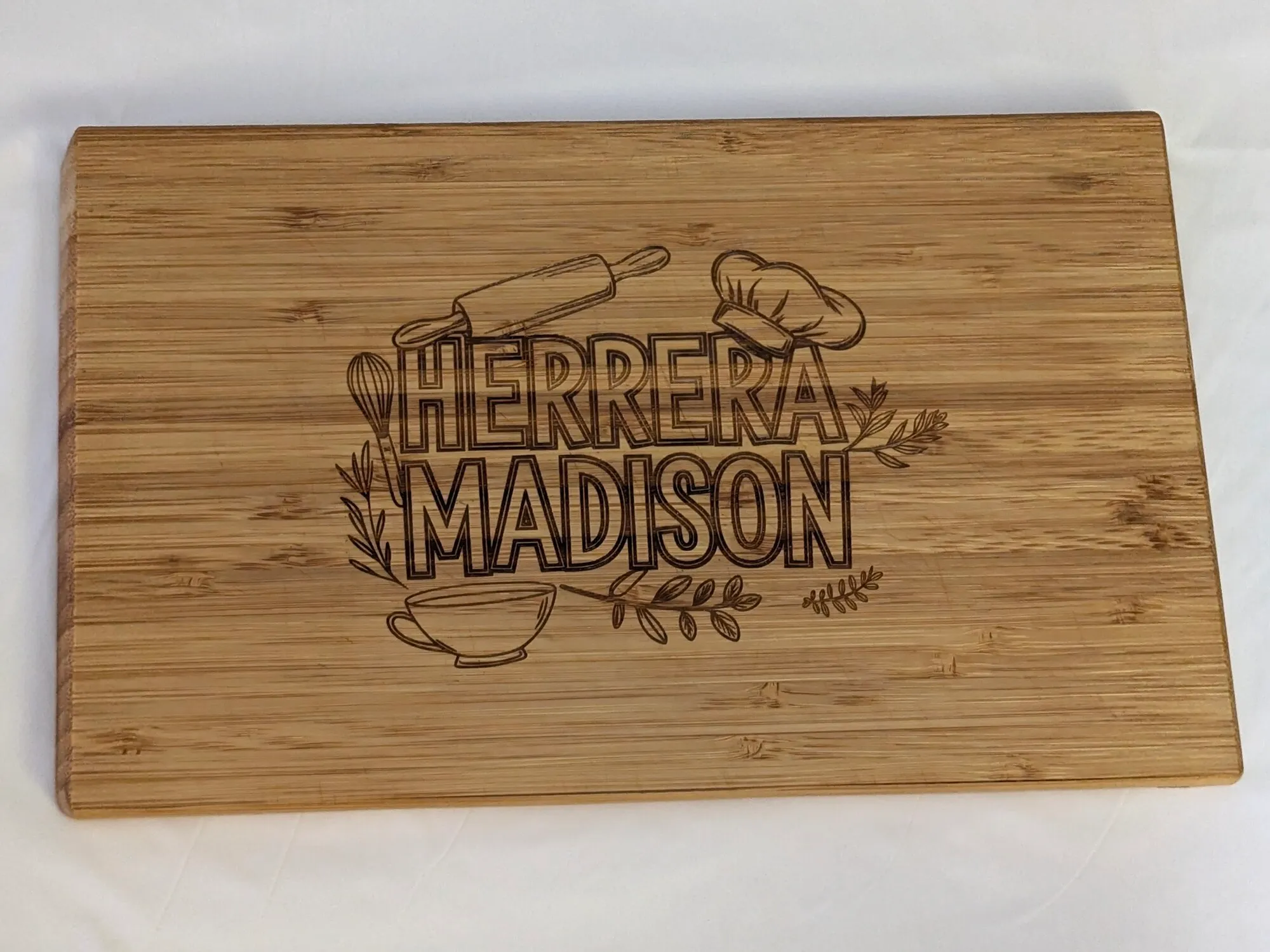
Our personalized bamboo cutting board takes the same hand wash and the same immediate towel dry. Its oiling cadence is tighter: about once a month, because bamboo is a grass, not a hardwood, and dries out faster. The board leaves our studio already re-oiled after engraving, so the first coat is one you inherit.
Every month or two of regular use, rub in a thin coat of food-safe mineral oil and let it sit overnight. Wood is dense and forgiving, but any solid wood dries out with washing, and oil is what keeps the grain deep and the surface smooth.
What should you never use on an engraved wood sign?
Skip silicone furniture polish, ammonia or bleach cleaners, abrasive pads, pressure washing, and the dishwasher. Each one either dulls the engraving contrast, strips the finish, or cracks the wood outright.
- Silicone furniture polish: builds a film that dulls the engraving contrast and is difficult to fully remove.
- Ammonia, bleach, or alcohol cleaners: can soften or cloud the sealer and strip oil finishes.
- Abrasive pads or powders: scratch through the finish faster than they lift any mark.
- Pressure washing (outdoor pieces): drives water past the finish and can splinter the face. A soft brush and mild cleaner do the outdoor job safely.
- The dishwasher, for anything wooden: heat plus water plus detergent warps and cracks solid wood in a handful of cycles.
When the finish itself needs attention
If an outdoor or porch piece is starting to look dry, re-seal it rather than scrubbing harder, and our outdoor sealing guide walks through the finishes we trust and when to reapply them. If you're deciding what wood to buy in the first place and how each species wears, that lives in the wood types guide.
Cleaning questions
Can I use furniture polish on an engraved wood sign?
We recommend against it. Check the label: silicone builds a film over the finish and settles into the engraved lines, dulling the contrast that makes the engraving readable. A dry cloth does the routine work.
How do I get dust out of the engraved letters?
A clean, dry paintbrush is the best tool we know. The bristles reach the low points of the engraving without scratching the face. A soft toothbrush works the same way on deeper cuts.
Is an engraved rolling pin dishwasher safe?
No. Heat and prolonged water can crack a solid-wood kitchen piece. Hand wash quickly in warm water, towel dry right away, and rub in a food-safe mineral oil every month or two of regular use.
The wood looks dry and pale. Can it be revived?
Usually, yes. On unpainted, oil-finished pieces, a thin coat of the original finish (a food-safe oil for kitchen pieces, a furniture-grade oil or wax for display pieces) restores depth. If your piece came from us and you're not sure what finish it carries, ask.
How often should a wall sign be cleaned?
A dry dusting once a month is plenty for most homes. Kitchens and covered porches collect grime faster, so those pieces earn the damp-cloth treatment two or three times a year.
Looking for a piece worth caring for?
Browse personalized gifts or the full collection to see what we're building right now.