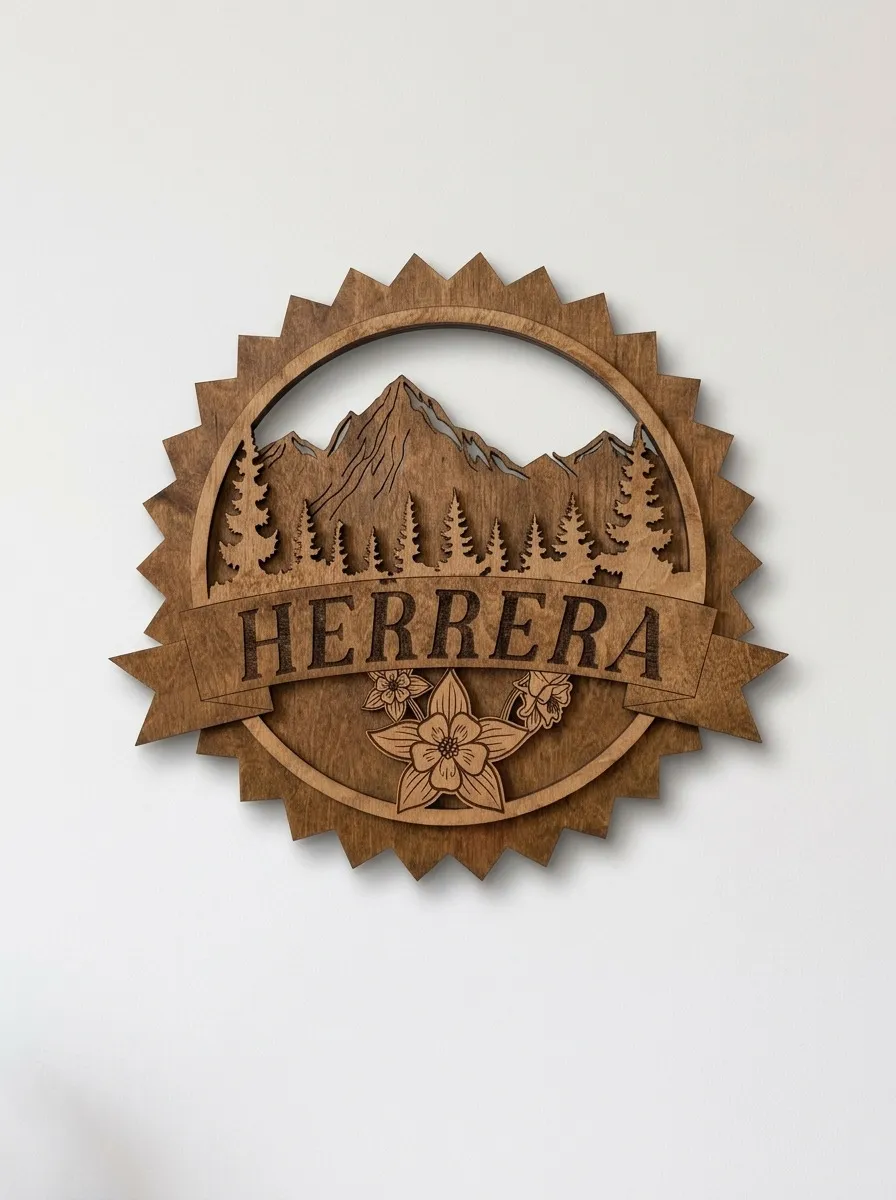
What is the best finish for an outdoor wood sign?
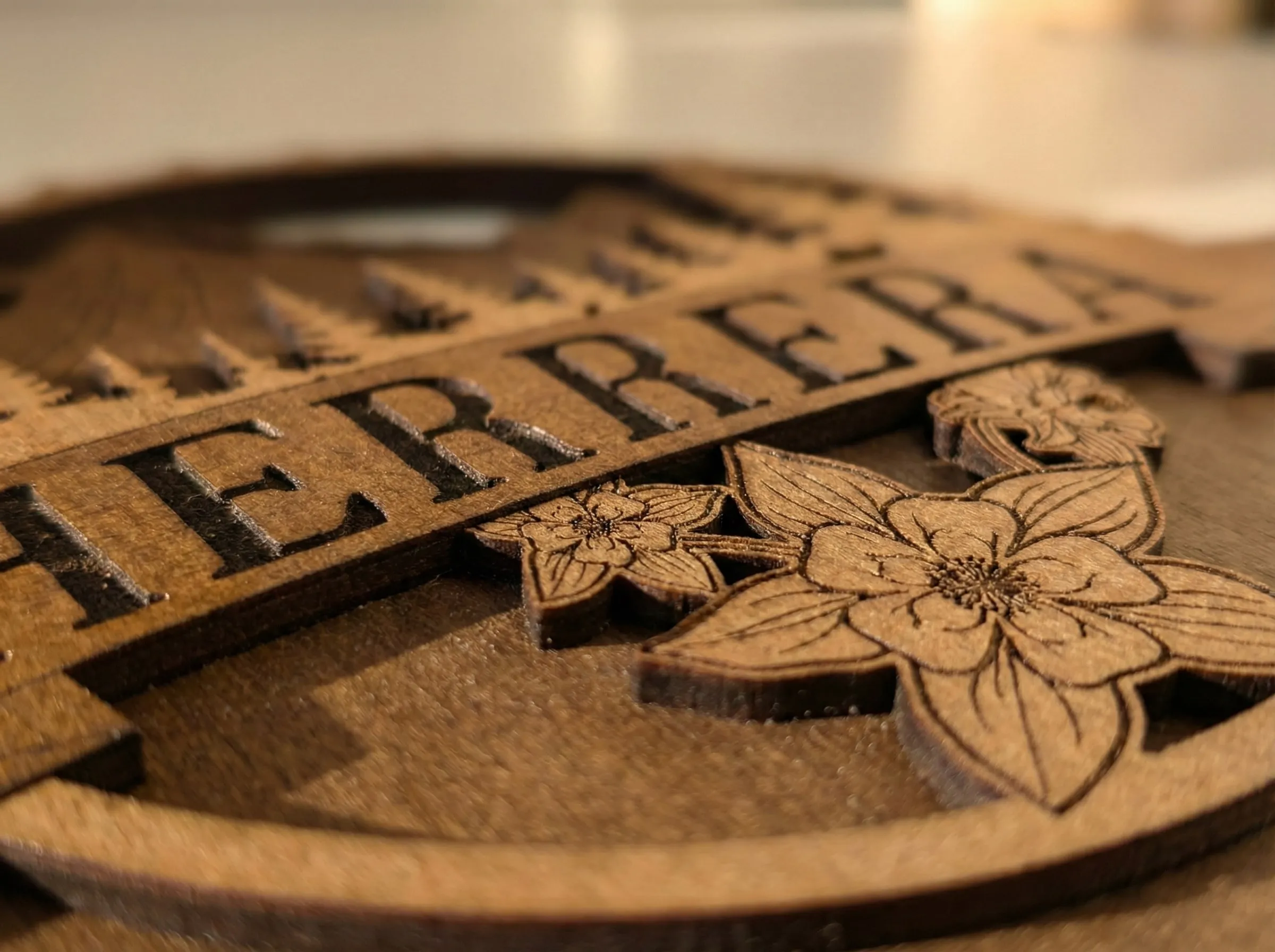
For an outdoor wood sign, spar urethane is the best all-around finish: it blocks UV, sheds water, and stays flexible enough to move with the wood through freeze-thaw cycles without cracking. Water-based polyurethane is the second-best choice, easier to apply and lower-odor, but it needs recoating sooner. Marine spar varnish outlasts both on boats and dock furniture, but its amber tint changes how engraved lettering reads, so it suits pieces where that warmth is wanted.
The right finish depends on what the sign has to survive and what you want it to look like doing it.
The three real options, compared
Spar urethane. Built for boat trim and porch railings, so UV resistance and water-shedding are the whole point of the product. It cures to a slightly flexible film rather than a hard shell. Wood outdoors expands and contracts with humidity and temperature, so a rigid finish cracks along the grain over a few seasons while a flexible one moves with it. It adds a warm amber tone rather than staying clear, though it doesn’t fight most stains.
Water-based polyurethane. Dries clear, almost no odor, and cleans up with water instead of mineral spirits, which makes it the easier finish to apply yourself if you’re resealing a sign at home. The tradeoff is durability: the UV-blocking additives in most water-based formulas break down faster than spar urethane’s, so a water-based topcoat needs recoating sooner than spar urethane. Worth choosing if a sign lives under a covered porch out of direct sun, less so on a south-facing wall.
Marine spar varnish. The traditional choice for exposed teak and dock hardware, and it has the UV and moisture resistance to match. It’s also the most amber of the three, closer to honey than clear, which deepens over the years the way an old varnished boat rail does. Beautiful on some pieces, a real change on others. Choose it for a sign where that warm, aged look is part of the point rather than a side effect, and skip it on anything with fine engraved detail where crisp contrast matters more than depth of color.
What decides it for your sign
Sun exposure is the biggest variable. A sign under a covered porch roof, out of direct sun most of the day, can get by on water-based poly and a shorter recoat cycle. A sign on an open, south- or west-facing wall is in direct UV for hours and earns the extra durability of spar urethane.
The look matters too. Spar urethane’s amber warmth stays closer to the natural wood tone than marine varnish does. If you want a sign that ambers and deepens with age, marine varnish is the choice.
Every outdoor finish needs a recoat. The three differ in how long a sign can go before it needs one. Our full walkthrough of the sealing process itself, coat counts and cure times included, is in the guide to sealing a wooden sign for outdoor use.
What we ship with
Our signs are made for indoor use, so none of them ships with an outdoor finish. A sign you want to hang outside needs one of the finishes above, applied by you, and we can’t promise how an indoor piece will hold up outdoors.
If your sign is already outside and showing its age rather than starting fresh, the finish question looks a little different. Our guide to restoring a weathered wood sign covers when a recoat is enough and when it’s time to sand back to bare wood first. And if winter is the part you’re actually worried about, what freeze-thaw and low winter sun do to a wood sign walks through why placement matters as much as the finish itself.
Still deciding? Message us with where the sign will hang and we’ll tell you whether an indoor piece fits that spot. Our house signs collection has the indoor options.