Will a wood sign last outside through winter?
Yes, a wood sign can survive outside through winter if it is sealed for it. What decides it isn’t the cold. It’s whether the sign has an outdoor sealer over its base finish, where it hangs, and a yearly ten-minute water-beading check. Skip those and freeze-thaw cycling and low winter sun do the damage.
Wood outdoors has a reputation, and most of it comes from watching a big-box welcome sign gray out and split by March.
What winter actually does to wood
Cold alone doesn’t hurt wood. The damage comes from water that keeps freezing and thawing inside it.
Snow lands on the top edge of a sign and sits there. On a mild afternoon it melts and soaks into any surface that isn’t sealed. That night it freezes, and water expands roughly nine percent when it does. Repeat that cycle over a season and unsealed wood fibers get pried apart a little more each time. The cracks come from that freeze-thaw loop working on trapped moisture, not from the cold itself.
The second, slower force is sunlight. Winter sun sits low, which means a sign on a south-facing wall takes the sun straight on its face, while the high summer sun passes mostly overhead. UV breaks down lignin, the natural glue in wood, and the surface slowly shifts toward silver-gray. That weathered look is lovely on a fence rail. On a sign with engraved lettering, it flattens the contrast that makes the design read.
The third is plain dampness. A sign that stays wet for weeks, pressed against damp siding or hung in a spot with no airflow, invites the finish to fail from behind. It comes down to placement.
What our oil finish does, and what it doesn’t
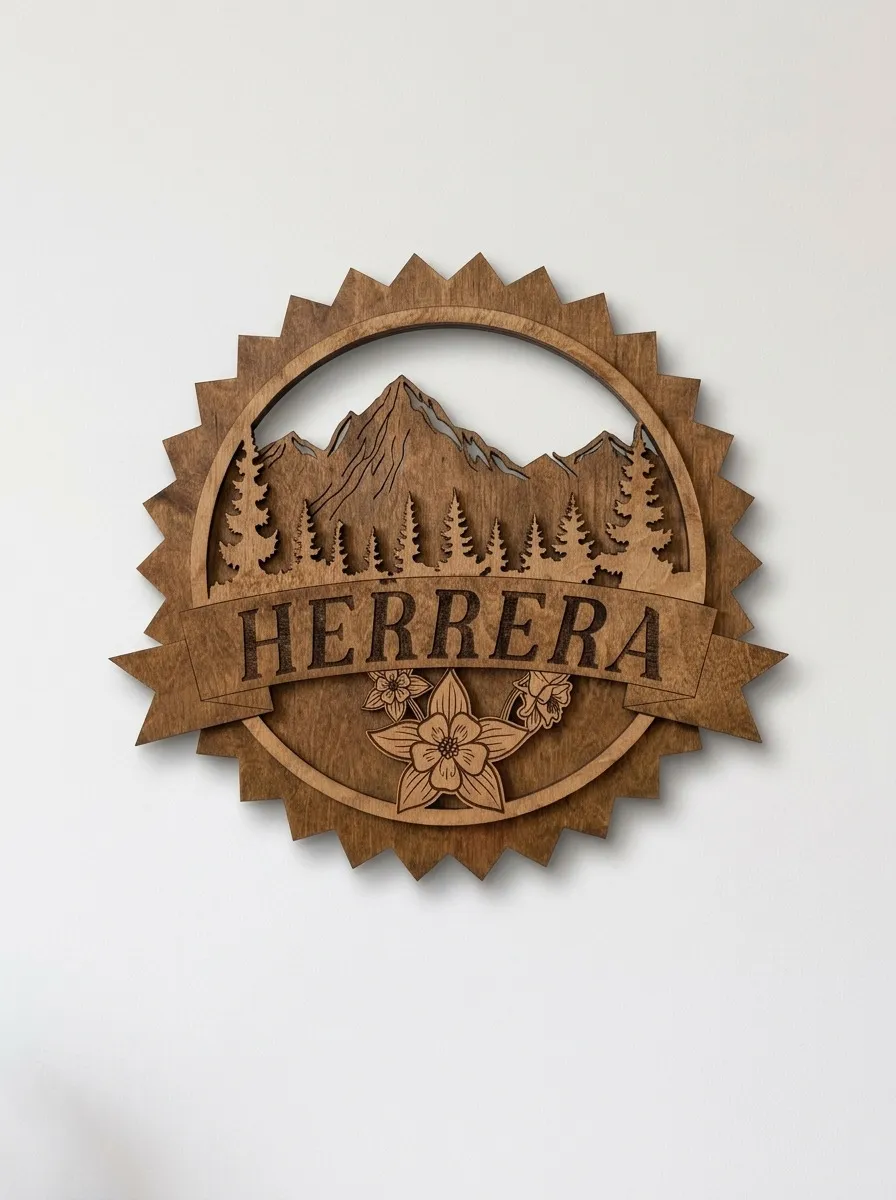
The mountain name sign and other oil-finished pieces get a natural matte oil that soaks into the wood instead of forming a shell on top, which is why the grain still feels like wood under your hand. Our signs are made for indoor use, and for indoor pieces that finish is the whole story.
A sign that will live outside needs more. An oil finish alone will shrug off a splash, but it isn’t built to stand up to a season of freeze-thaw. An outdoor sign needs a dedicated exterior sealer over the top, one that blocks UV and sheds standing water, applied by you. We can’t promise how an indoor piece holds up outdoors. Our guide to sealing a wooden sign for outdoor use walks through it coat by coat. To pick the finish first, read the best finish for an outdoor wood sign. If your sign is headed for a porch, the sealing guide is the most useful twenty minutes you can give it.
If you’d rather not think about sealing at all, an indoor spot is the simpler choice.
Placement decides more than the forecast does
A covered porch is the best home an outdoor sign can have. A roof overhead means snow never sits on the top edge, the freeze-thaw cycle mostly happens elsewhere, and the sign sees reflected light instead of direct UV.
A fully exposed spot (fence gate, garden post, uncovered wall) is the hard case. The sign will take everything the season has. It can still work, but only with a properly maintained sealer, and it will need that sealer refreshed more often than a covered sign does.
The spot to avoid is flat against a wall that stays damp. Northern exposures with no sun, spots behind shrubs with no airflow, walls that catch roof runoff. If you can, leave a little standoff so air moves behind the piece, and check that a gutter isn’t quietly emptying above it.
One more winter-specific note: hang the sign so the top edge can shed water. A sign tilted even slightly forward drains. A sign tilted back holds a little shelf of meltwater against its own face.
The ten-minute spring ritual
Signs that last outside share one habit, and it isn’t complicated. Once a year, ideally when you put the storm windows away, take the sign down and look at it in good light.
Run a hand over the face. If water still beads on the surface, the sealer is doing its job: hang it back up and you’re done. If the surface feels dry and thirsty, or water darkens the wood instead of beading, it’s telling you the seal has worn through and it’s time for a fresh coat. Wipe it clean, let it dry fully, and recoat per the sealing guide. The whole exercise costs less time than the trip to buy the sealer.
While it’s down, check the hanging hardware too. Freeze-thaw works on screw holes the same way it works on wood fiber, and a sign that survives winter beautifully can still end up on the ground in a March wind because a ring pulled loose.
So: how long, really?
That depends on the spot, the sealer and the yearly check. A covered porch is the easiest case. A fully exposed spot works with a maintained sealer, and the sealer, not the sign, is what you renew. Unsealed and exposed, one winter is enough to leave a mark. Ask the question in September rather than April.
Our signs are made for indoor use. If you hang a piece outdoors anyway, seal it, choose the spot with care, and check it every spring.
If you’re weighing a specific spot and aren’t sure which case it falls into, send us a photo of the wall before you order and we’ll say whether an indoor piece fits.