Wedding Welcome Sign Wording
The wording that works is a greeting, the names, and the date: “Welcome to the wedding of Ana & Marcus · June 14, 2026.” Match the formality to the invitation, check how the names set at width, and pick a line that still reads well on a wall at home.
Word a welcome sign so it reads at a glance, matches the day, and, if you choose the words right, earns a second life on a wall at home.
What is a wedding welcome sign for?
A welcome sign tells arriving guests they are at the right wedding. Every wording decision gets easier once you hold it against that job. Guests read it from ten feet away, in motion, often while carrying a gift, so the classic formula has three elements: a greeting, the names, the date.
"Welcome to the wedding of Ana & Marcus · June 14, 2026" does the whole job. Everything beyond it is styling.
What should a wedding welcome sign say?
Everything beyond the greeting, the names, and the date is optional layering. Five formulas:
- The classic: "Welcome to the wedding of [Name] & [Name] · [Date]". Reads well in photos and still fits on the wall ten years later.
- The warm inversion: "[Name] & [Name] welcome you to their wedding". Puts the couple in the host's seat: slightly more formal, suits intimate weddings.
- The single line: "The [Last Name] Wedding" with the date below. Strongest for couples sharing a new name; doubles as a keepsake with no edits.
- The line that means something: a short phrase from the vows, the proposal, or the song, with names and date beneath in smaller lettering. The riskiest to typeset and the most personal when it lands.
- The logistics add-on: "pick a seat, not a side" and its cousins. Useful for unassigned ceremonies; know that it dates the sign to the event itself.
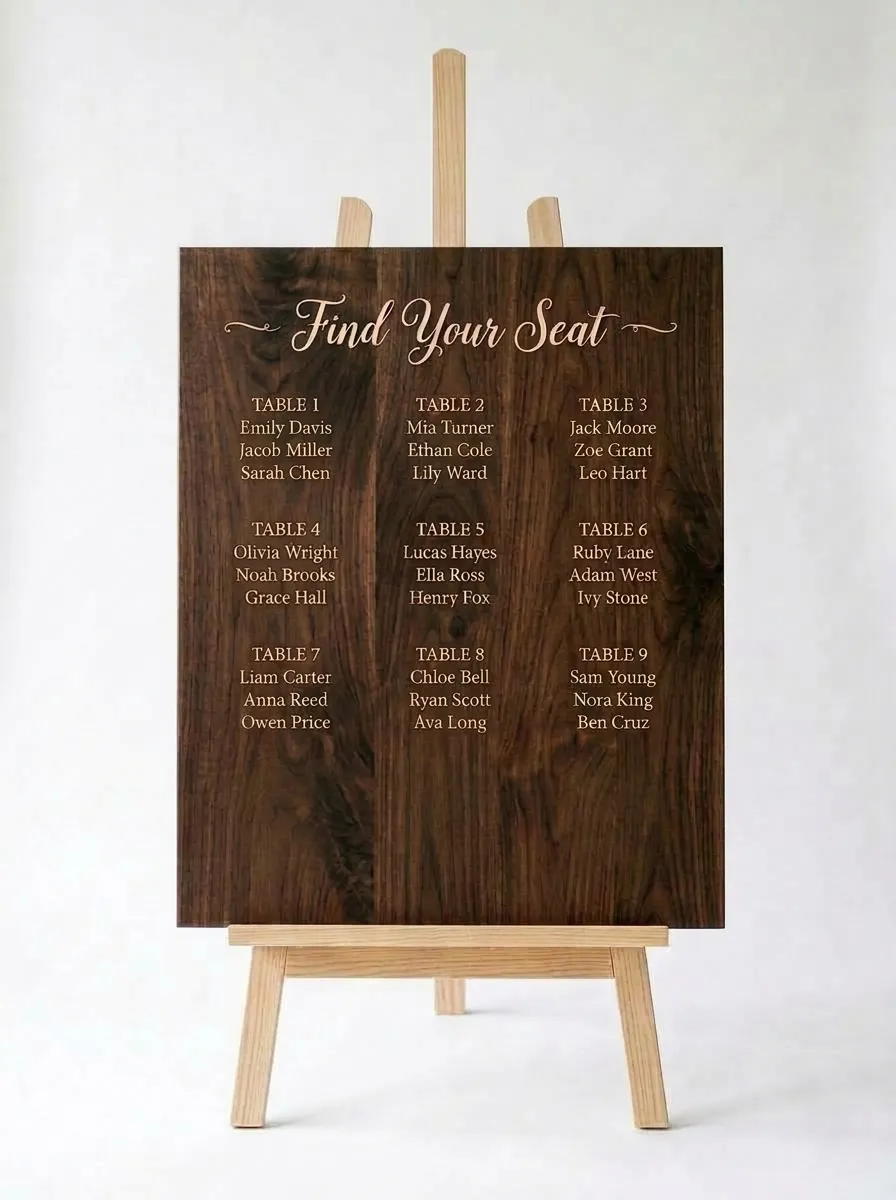
If the wedding is fully seated, put the table assignments on their own board instead of squeezing them onto the welcome sign. Our custom seating chart sign holds up to twenty tables of names and keeps the welcome sign free to say only the names and the date.
How formal should the wording be?
The lettering sets the formality more than the words do. "Welcome to our wedding" reads black-tie in an engraved script and backyard-casual in a hand-drawn block letter. Decide the ceremony's register first, then let the letter style do the work. If you're torn, script for the names and a clean block letter for the date is the pairing that flatters both.
Never sacrifice legibility for decoration. If guests need a second look to catch the names, the styling went too far.
How do you fit long names on a welcome sign?
Drop the greeting to a small line and let the names be the sign: name length shapes the layout more than any style choice. "Jo & Ty" gives a typesetter room to play; "Alexandra & Maximiliano" fills the board before the date exists. Long names set the layout: fewer words everywhere else, and the date sits beneath. When we lay out a piece with long names, that's the direction we'll propose in the proof.
Can you keep a wedding welcome sign after the wedding?
Yes, if you choose wording without ceremony logistics in it. Names, date, and place age into a keepsake. A line like "pick a seat, not a side" retires with the event.
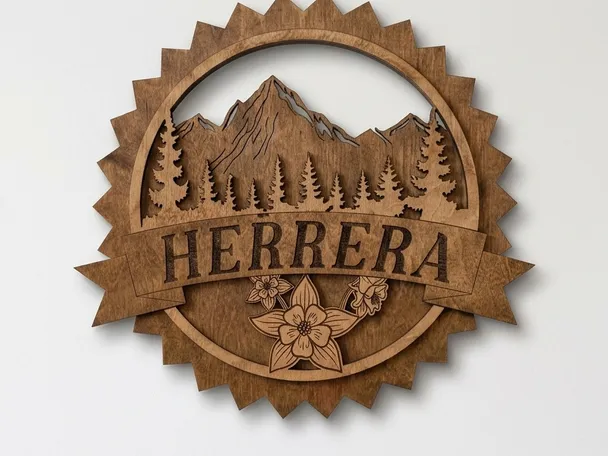
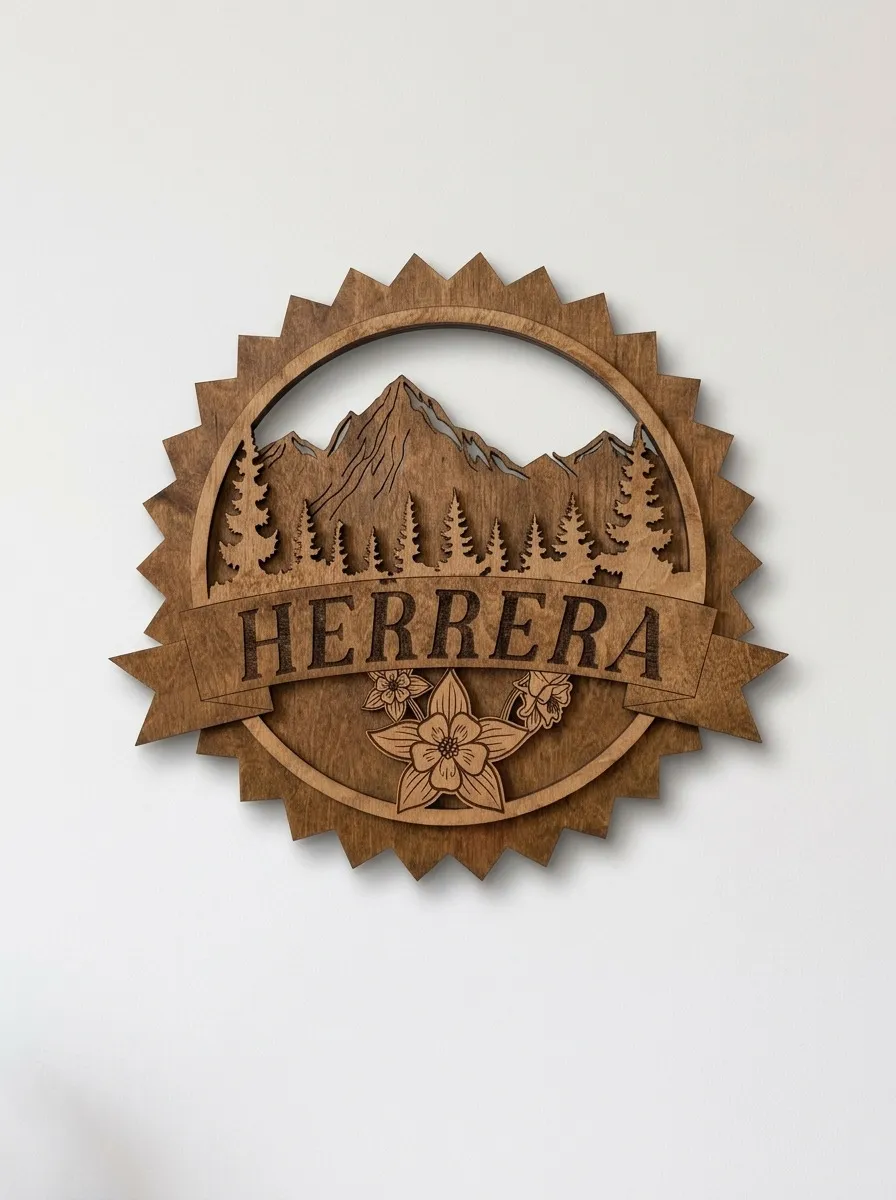
If you want both a ceremony piece and a future wall piece, choose wording with no logistics in it (names, date, place) so nothing on the board expires when the dancing ends. Then split the jobs: a personalized welcome sign for the day, and a separate piece for the home, like a mountain name sign marking the family they just started.
For gift-givers shopping around the wedding itself, the wedding wood signs page collects our wedding pieces, and the wedding gifts collection is the browsable version.
Getting one made
Welcome signs are commission work for us: sized to the venue, worded to the couple, with a layout proof before anything gets cut. Send the wording, the date, and where it will stand through our custom order page and we'll come back with a proof and a quote. If the wording isn't final yet, send the shortlist; seeing two options typeset usually settles the debate faster than another week of discussion.
Welcome sign questions
What should a wedding welcome sign say?
The dependable formula is a greeting, the names, and the date: "Welcome to the wedding of Ana & Marcus · June 14, 2026." Everything else (a quote, "to our beginning", a hashtag) is optional layering on top of those three elements. If the sign only says one thing, make it the names.
First names or full names on the welcome sign?
First names for the warmth, full names when the guest list includes people who know only one side. A practical rule from the workshop: count the characters. Two long full names plus a date can force the lettering small enough to defeat the sign's whole job, which is being read at a glance from ten feet.
When should the welcome sign be ordered?
Once names and date are locked: usually the moment invitations go out. Leave margin for a layout proof and shipping. A month before the wedding is comfortable; two weeks is workable if the wording is final.
Can the welcome sign be kept after the wedding?
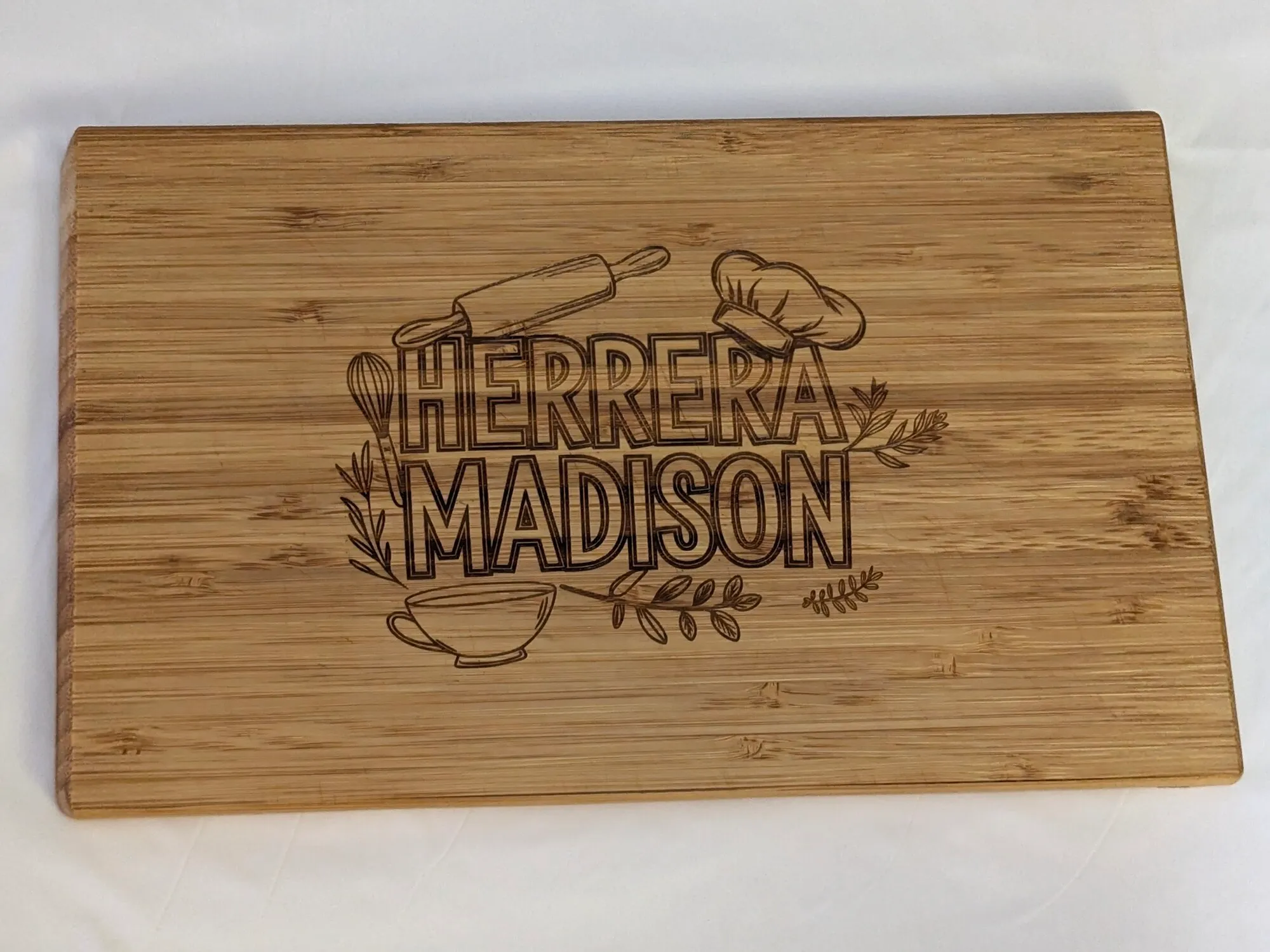
That depends on the wording you pick. Date-plus-names signs become anniversary pieces. Signs with ceremony logistics ("pick a seat, not a side") retire with the event. If you want a keepsake, keep the wording to names, date, and place, or plan a second, smaller piece for the home, like a family established sign.
Have the wording? We'll set it in wood.
Start a custom order with your names and date, or browse wedding gifts for pieces that outlast the day.