Living with handmade wood decor: care, light, and the first year

A wood sign’s natural matte oil finish needs little upkeep: wipe with a dry cloth, keep it out of direct sunlight, and don’t let water sit on it. Direct sun lightens birch over time. When the finish looks flat, past year one, a coat of food-safe mineral oil restores it.
“How do I take care of it once it arrives?” A handmade wood piece feels different from the framed print it’s replacing, so it’s hard to know whether it’s fragile. Day to day it needs little. The routine is below, along with what changes over the year ahead.
The finish is oil, and that changes the rules
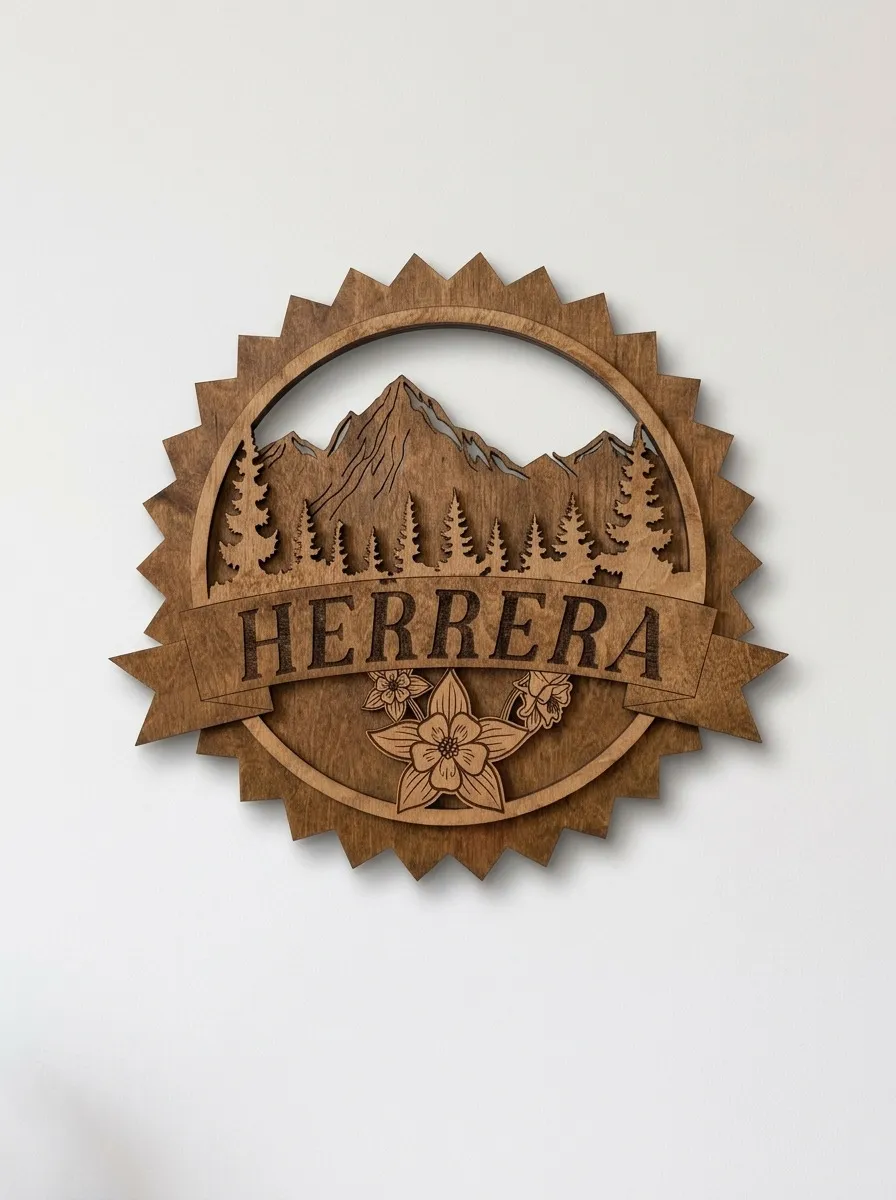
The mountain name sign and other oil-finished pieces get a natural matte oil. That’s a different animal from the glossy poly coat you’d find on a lot of printed or laminated wall decor. A poly finish sits on top of the wood like a shell. Oil soaks in and becomes part of the surface, which is why the grain still reads under your hand instead of under a layer of plastic. Painted pieces like the baby sign carry a matte sealer over the paint, and the dry-cloth routine below applies to them too.
The tradeoff is that oil finishes want a little more attention over years, not weeks. Day to day, care is simple: wipe with a dry cloth, keep it out of direct sunlight, and don’t let standing water sit on it. That’s the whole routine for most signs in the catalog, whether it’s a baby name sign over a crib or a wooden name puzzle on a playroom shelf.
Where to hang it
Direct sun fades and dulls the finish, and it lightens the birch. A wall that gets a few hours of morning light is fine. A spot that sits in full afternoon sun for years will lighten and dull the finish faster than one that doesn’t.
Humidity is the other variable. A sign hung in a normal living room or nursery has nothing to worry about. One hung directly above a radiator, or in a bathroom with heavy daily steam, will dry out and dull faster because the oil finish is losing moisture it can’t easily replace. If you’re deciding between two spots for a mountain name sign, pick the one further from direct heat and glare, not just the one with better sightlines.
What the first year actually looks like
Nothing dramatic happens in month one. The finish is fully cured by the time it ships, so there’s no “settling in” period to worry about. What you’ll notice over the following months is subtler: the surface takes on a slightly softer sheen compared to the day it arrived, and light slowly lightens the birch. That’s the wood aging normally, not the finish failing.
Natural Baltic birch starts warm and honey-toned, and we often point people toward it for rooms that are already light and neutral.
When the finish dulls
Eventually, usually somewhere past year one depending on light exposure, a matte oil finish will start to look a little flat instead of soft. That’s the signal to refresh it, not replace the piece. A light coat of food-safe mineral oil, worked in with a clean cloth and left to absorb, brings the surface back. It’s the same idea as oiling a wood cutting board: cheap and quick, and meant to be repeated rather than done once.
What doesn’t belong indoors
If you’re hoping to hang a sign somewhere it’ll take real weather (a covered porch, an exposed entryway, anywhere it’s exposed to rain or extended sun), the indoor matte oil finish on its own isn’t built for that. We’ve written a separate step-by-step on sealing a wooden sign for outdoor use that walks through the extra sealant coats needed before a sign goes outside. Don’t skip it if that’s where yours is headed. It’s a different job than the care routine above.
More care and wood guides
If you’re deciding between wood types before you order, our wood types guide breaks down how wood types differ beyond just color. The rest of it (finish, sizing, outdoor use) lives in our care and sizing guides.