Name Puzzle Styles Compared
Pegs and knobs are easiest for the youngest hands and can work loose over time. Finger holes have nothing to break off but need a pincer grasp, so they suit two and up. Interlocking puzzles have no tray, which looks better and loses pieces faster.
Name puzzles look alike in listing photos, and then arrives built one of four different ways. The difference is how a child gets a piece out of the board, and it decides which ages the puzzle works for.
The four styles
Peg. A small dowel stands up from the face of each piece. The child grabs the peg, the piece comes out. This is the easiest grip of the four.
Knob. The same idea with a wider, rounded top instead of a straight dowel. Slightly easier to grip than a bare peg for a hand that has not learned to pinch yet, and slightly more to catch on when the puzzle goes in a bag.
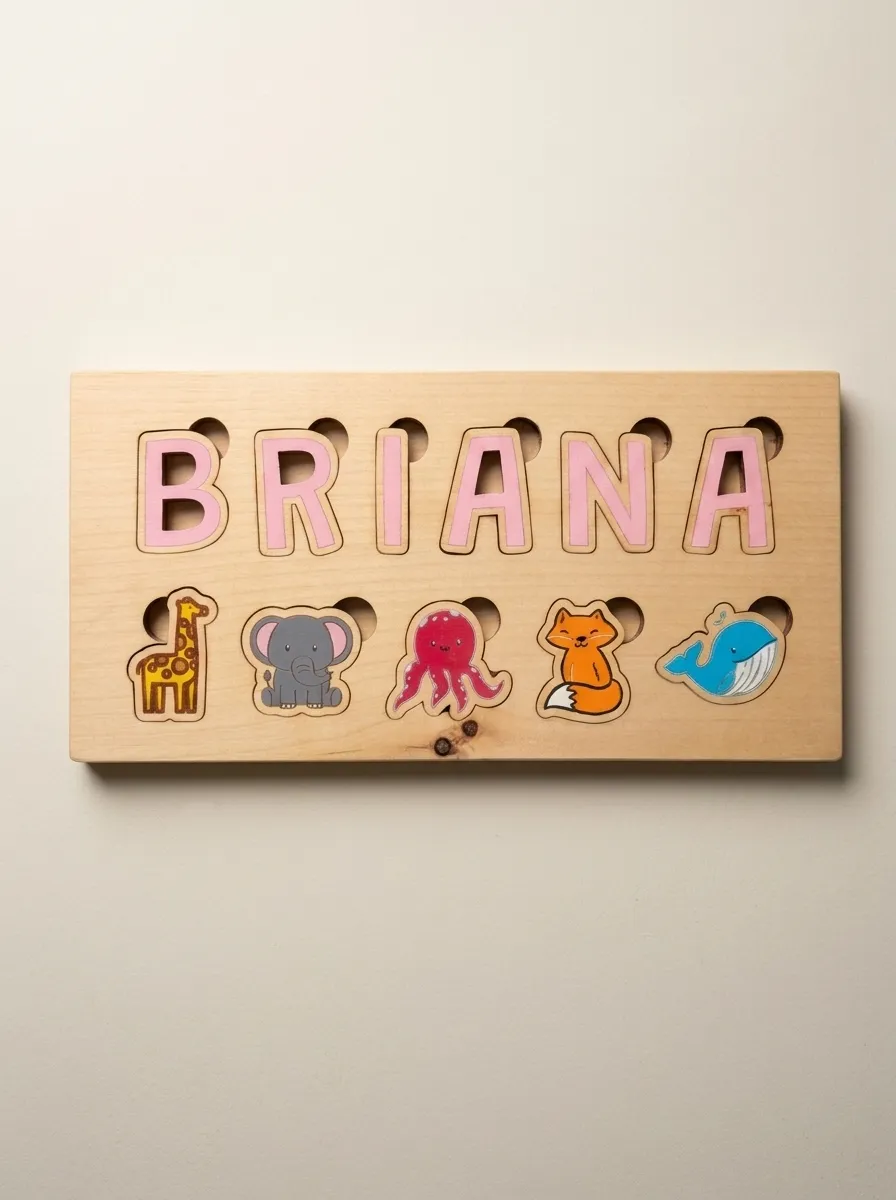
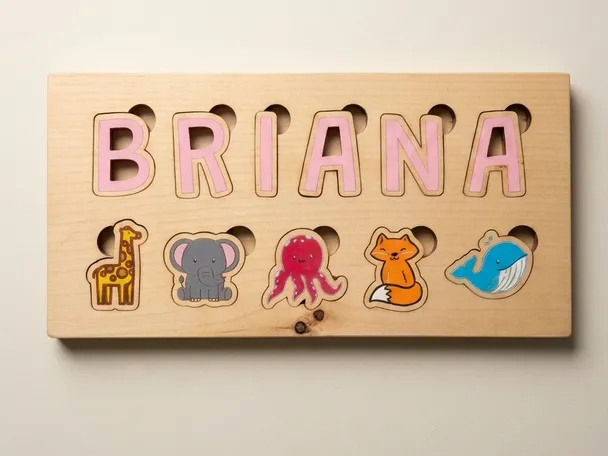
Finger hole. No raised part at all. A hole is drilled through the piece and the child hooks a fingertip through it to lift. The piece has no raised part to snag or come unglued. It asks more of the hand than a peg does.
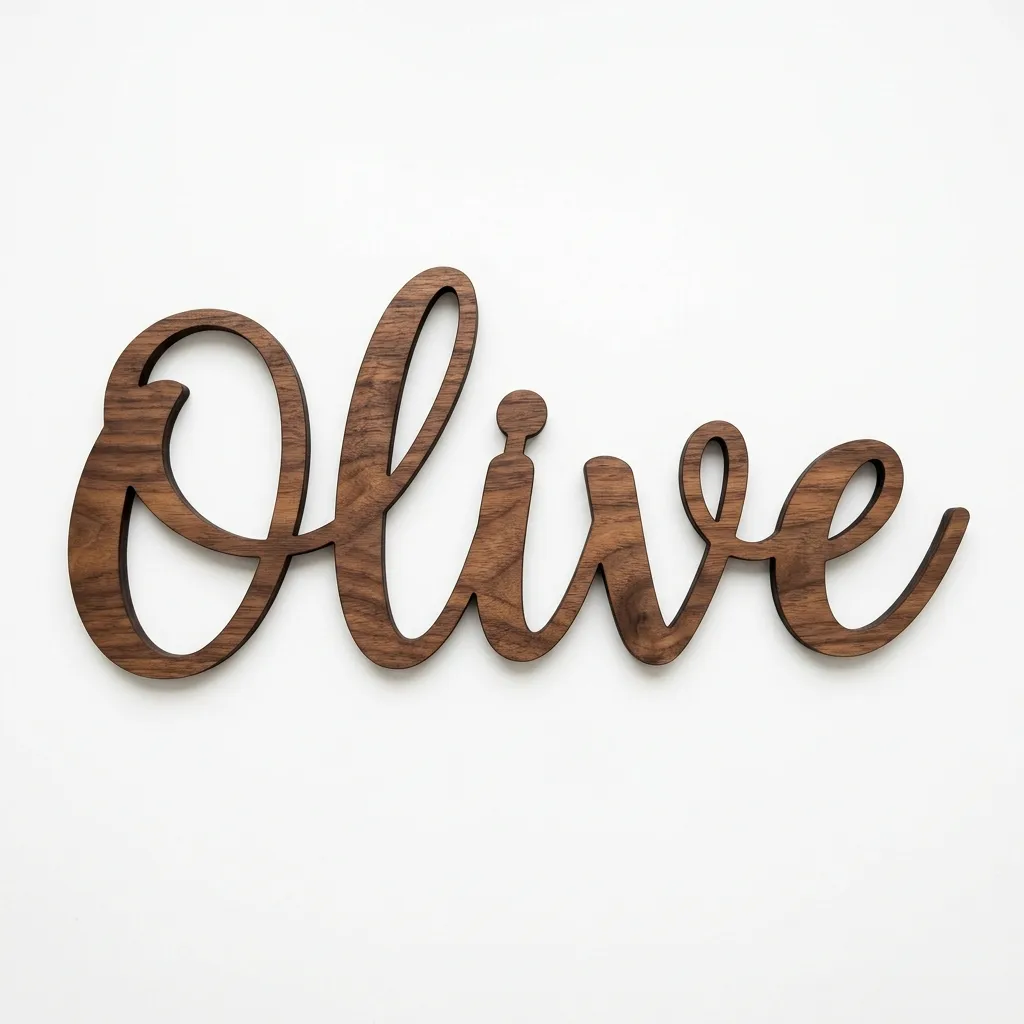
Interlocking. No board. The letters connect to each other jigsaw-style and stand on their own or lie flat. This is the one that photographs best and the one that behaves least like a puzzle, since there is no recess to tell you where a piece belongs or that one is gone.
Which grip suits which age
Grip strength and the pincer grasp arrive on their own schedule, so treat these as rough brackets rather than rules:
- Around one, supervised. Pegs and knobs. A one-year-old grabs with the whole hand well before they pinch with two fingers, and a raised part is something a whole hand can close around. A finger hole at this age mostly gets ignored.
- Around two. Any of the three tray styles. The pincer grasp is usually working by here, which is the point at which finger holes stop being a barrier.
- Three and up. All four, and this is where interlocking finally makes sense: it needs a child who can hold the shape of the whole name in their head, because nothing on the puzzle tells them where a piece goes.
In every style, the pieces lift completely free, which is what makes it a puzzle and also what makes it a small-parts toy. Under three it is supervised play regardless of the grip. Our name puzzle by age guide goes through what play looks like at each stage.
What each style gets wrong
Pegs and knobs are glued on. A peg is a separate part seated in a drilled hole, and a glue joint on a toy that gets dropped, chewed, and stepped on is a joint that eventually fails. When it does, the thing that made the piece easy to hold becomes a loose part of its own. You can still choose a peg puzzle; check its joints now and then.
Finger holes ask for a skill the child may not have yet. If the puzzle is a gift for a one-year-old and it is meant to be used at one rather than kept for later, a finger-hole board will sit unused for a while. That is a real cost and we would rather name it than let a buyer find out after it arrives.
Interlocking puzzles lose pieces silently. A tray puzzle shows an empty recess the moment something goes missing. An interlocking one does not, so the letter under the sofa stays under the sofa until someone tries to rebuild the name. On a personalized puzzle a missing piece is not replaceable off a shelf, which raises the stakes.
Stands, stools, and benches are a separate question. Some name puzzles come mounted on a step stool or a standing frame. That is a furniture decision rather than a puzzle one. It changes where the piece lives and how much it costs.
How to check one before you buy
- Look for the lift mechanism in the photos, not the description. Listings often say "easy-grip" without saying which of the four it is. An angled photo shows it in a second.
- Check whether the tray holds the pieces snugly or loosely. Too tight and a child gives up; too loose and the pieces slide out when the board is carried. You cannot see this in a photo, so it is worth asking.
- Ask whether pieces are cut from the board they sit in. A piece cut from its own recess fits it exactly. A piece cut separately to a nominal size fits approximately.
- Ask what happens if a piece is lost. On a personalized puzzle this is not a stock replacement, so the answer varies a lot by maker.
Name Puzzle Style Questions
Are pegs or finger holes better for a one-year-old?
Pegs, if the puzzle is going to be used at one. A peg gives a whole-hand grip, and a one-year-old grabs before they pinch. Finger holes need a pincer grasp that usually arrives closer to two. At one, any name puzzle with lift-out pieces is supervised play rather than toy-bin play, whichever grip it uses.
Do pegs break off?
They can. A peg is a separate small part glued into a drilled hole, and glue joints on a toy that gets dropped and chewed do fail eventually. That is the trade for the easier grip: the part that makes it easier to hold is also the part that can come loose and become a small piece on its own. Check peg joints periodically on any peg puzzle, whoever made it.
What is an interlocking name puzzle?
One where the letters connect to each other directly, jigsaw-style, with no board underneath. It looks good standing on a shelf and it travels flat. The cost is that there is no tray telling you a piece is missing, so pieces go astray without anyone noticing until the name will not go back together.
Which style do you make?
A finger-hole tray puzzle: a solid wood board with each letter and animal cut out and seated in its own recess, and a hole drilled through the piece to lift it by. The pieces have no pegs or knobs glued on. That is a deliberate choice and it is not the right one for every age. See the comparison above.
Want the finger-hole version with their name on it?
Ours is a finger-hole tray puzzle: every letter and animal is cut from the board it sits in, hand-painted in a thin coat that leaves the wood grain showing, then sanded and test-fitted piece by piece before it ships. See it on the wooden name puzzle page, or the sizing and pricing breakdown on the toddler name puzzle page. Shops and daycares choosing a single style for a whole run can send the list to our wholesale name puzzle page instead, which quotes the price and the ship date together before anything is cut.