The fifth anniversary is wood. Here is how to choose one that lasts.
Year five is the wood anniversary. If you want the gift to still mean something at year fifteen, three things decide it: the material you pick, whether the engraving is cut deep enough to survive handling, and whether the piece gets used or displayed.
You can read a dozen gift lists and still not know what separates one wooden box from another. The lists give you the material. They don’t tell you what makes a wooden object survive five more years.
Where the wood tradition comes from
Most gift guides follow a traditional list that names a material for each milestone year, and year five on that list is wood.
The usual reading is that five years in, a marriage has roots and grain. It gives you something to write in the card.
One wood, its stains, and bamboo: how each ages
We cut one wood, Baltic birch, and stain it for a darker look. For kitchen pieces we use bamboo. The base material matters more than the stain or the topcoat here, because you can renew a finish and you can’t renew the wood.
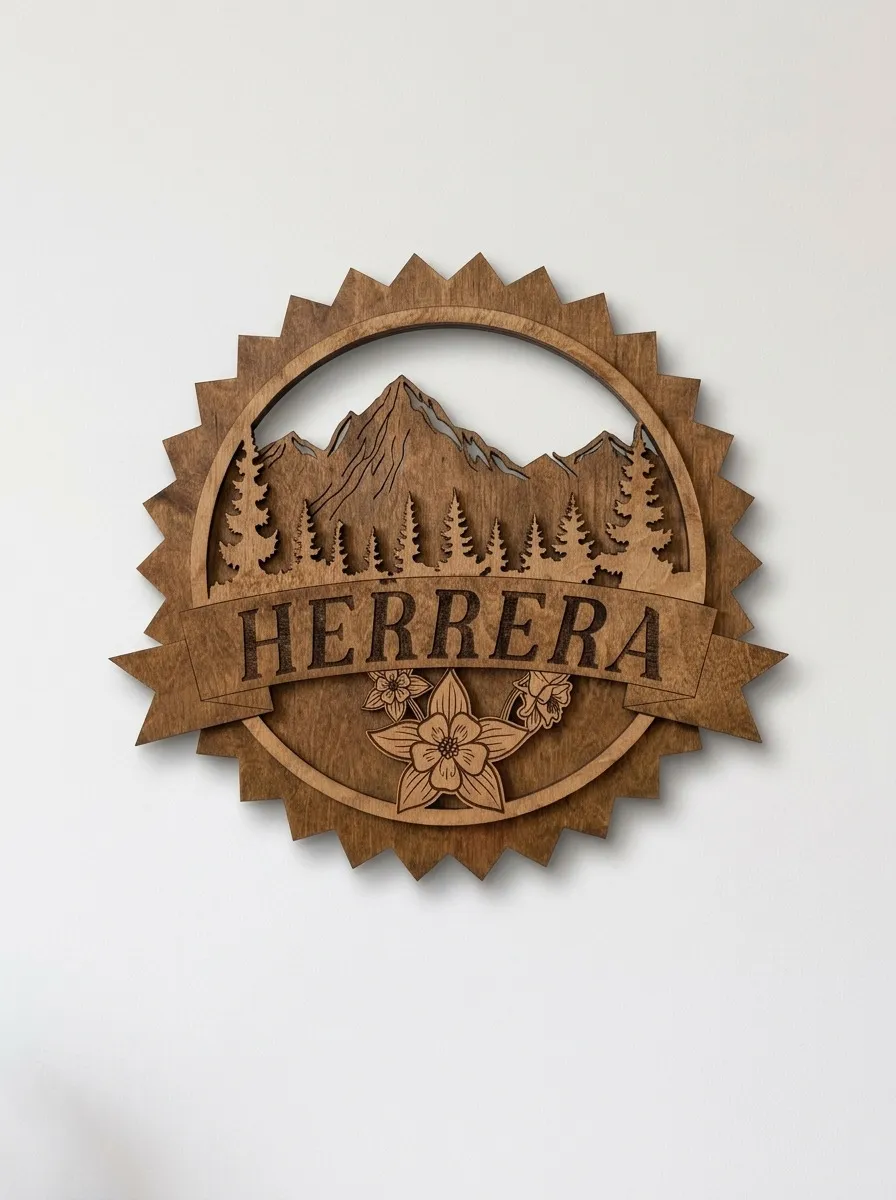
Baltic birch is a pale, tight-grained plywood with many thin plies and no voids. It engraves with high contrast: the laser darkens the cut, and the pale surface around it makes the lettering read from across a room. It’s our default for signs that hang indoors.
Walnut-stained Baltic birch is darker. The engraving contrast is lower, so lettering reads as a texture rather than as a line of dark type. It suits pieces you pick up and turn over. It’s the stain we reach for when someone wants the object to feel weighty rather than graphic.
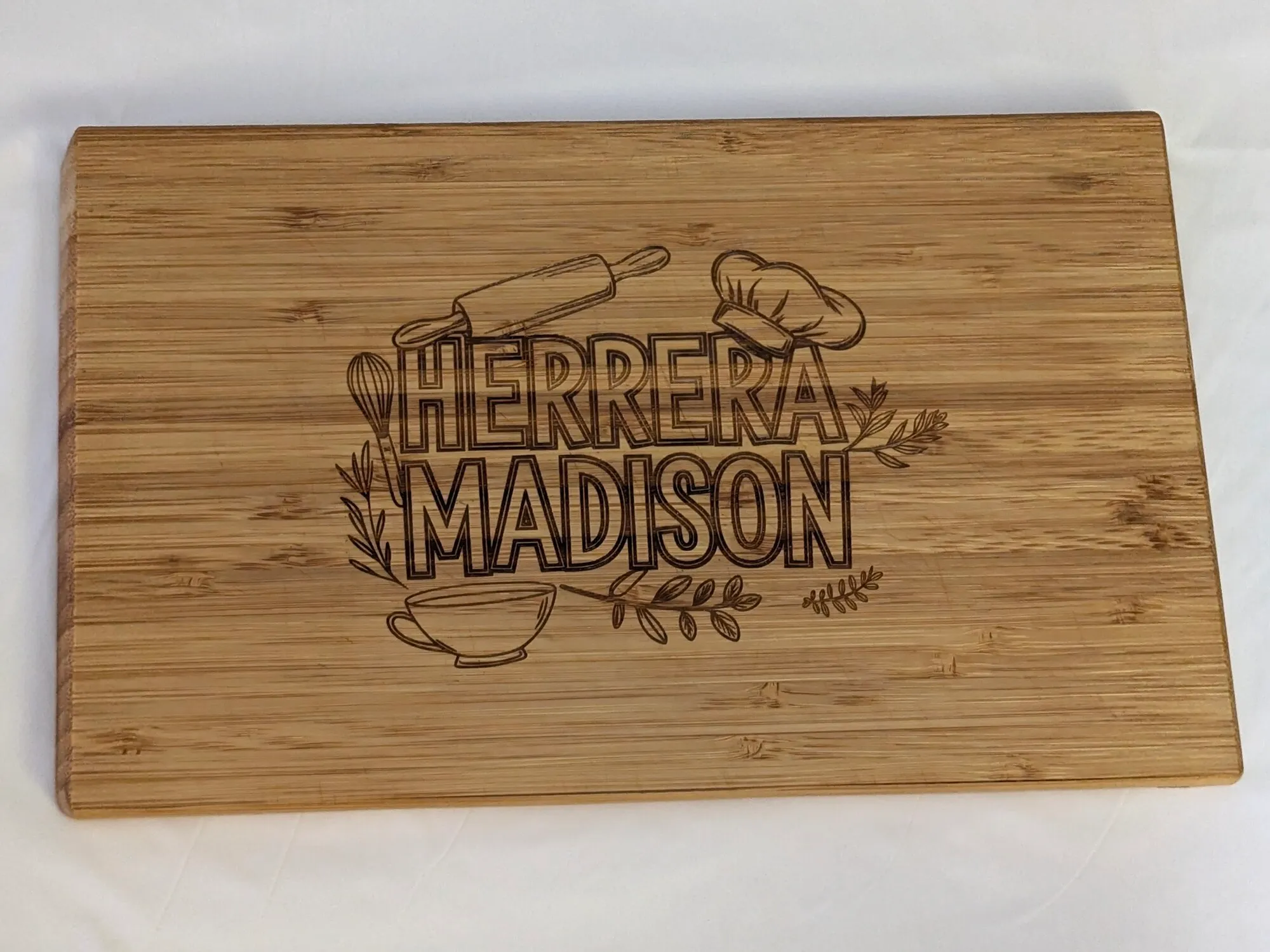
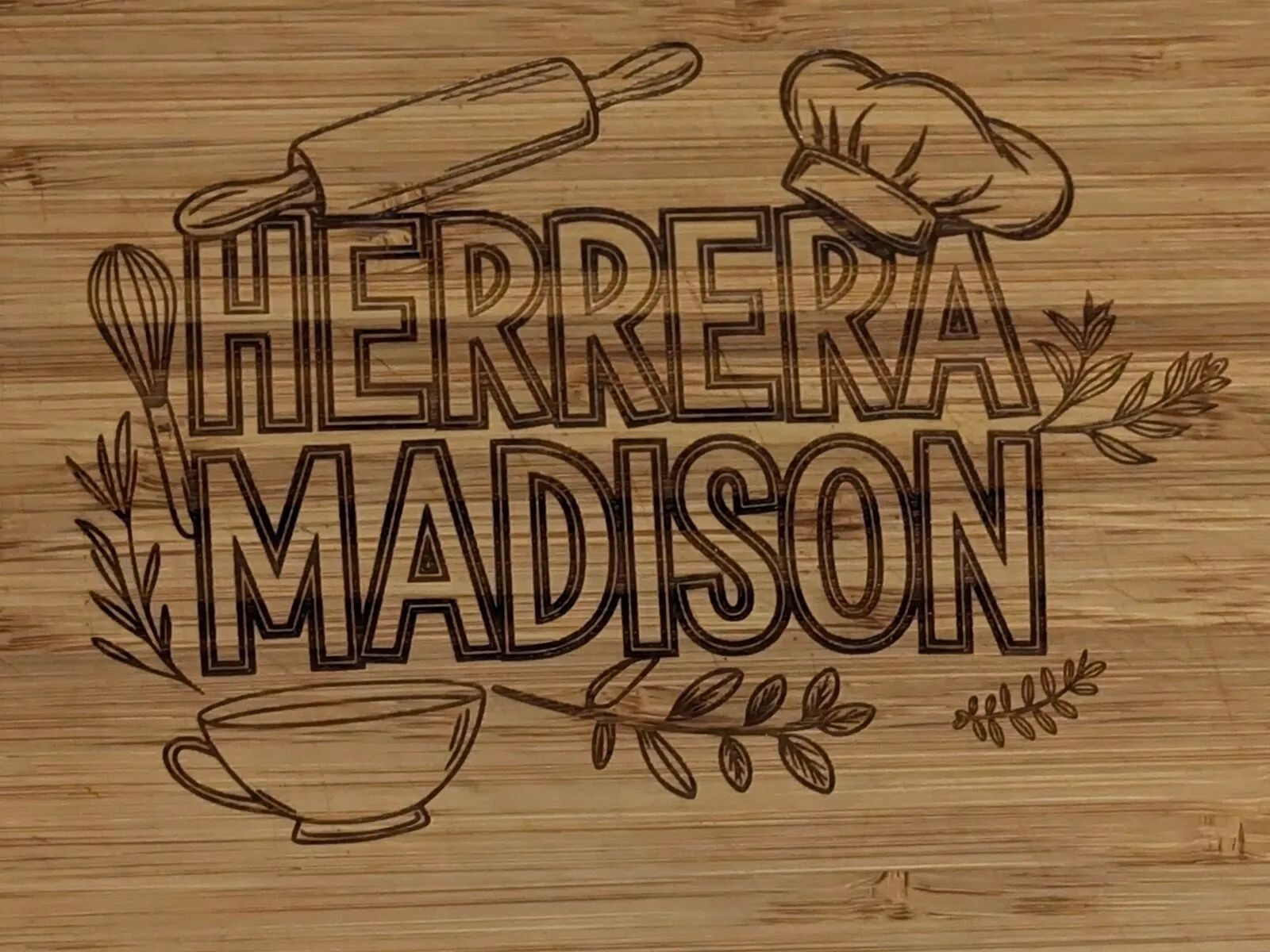
Bamboo is technically a grass, and a hard one. It’s the surface for anything that gets used in the kitchen, which is why our personalized cutting board is bamboo and not birch. It still needs hand washing and a prompt dry.
None of these is better than the others. They age differently, and what matters depends on where the piece will live.
Will it be used, or will it be displayed?
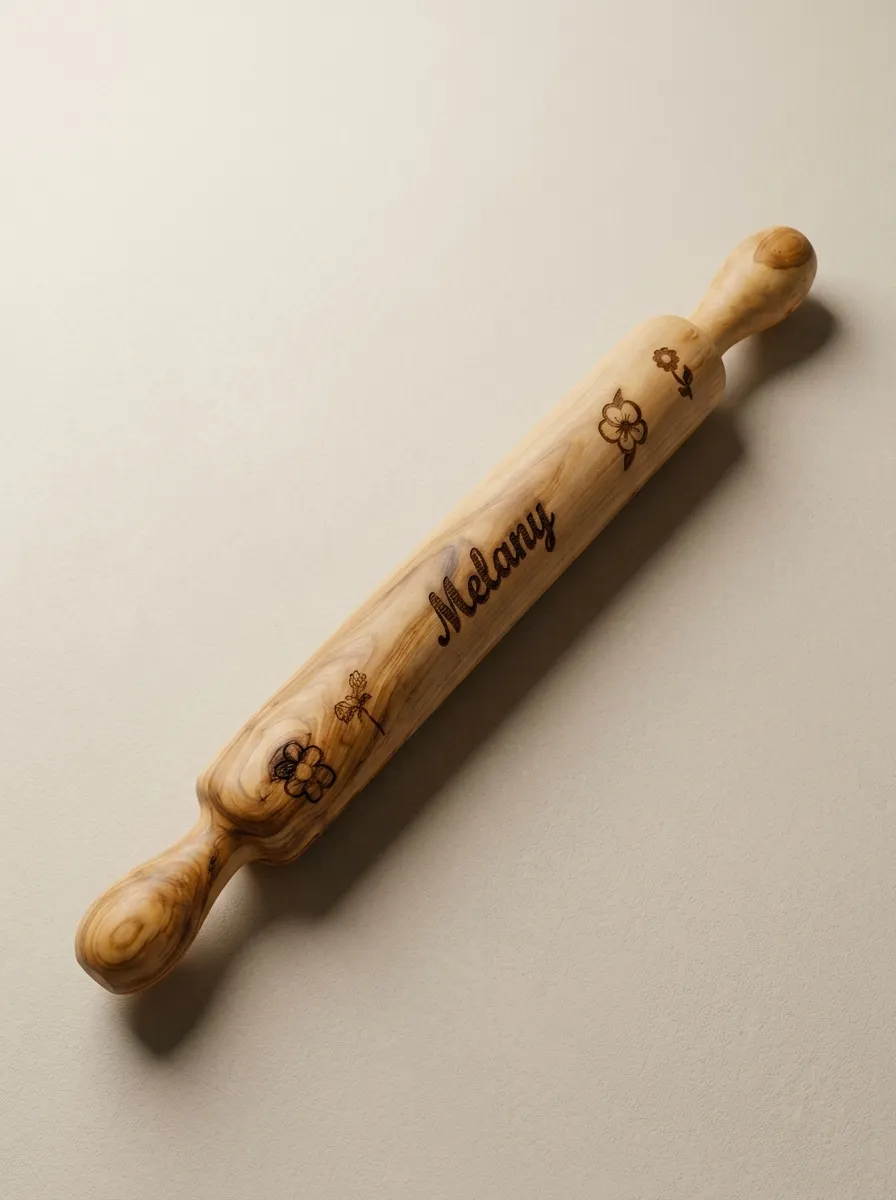
A used piece earns its meaning slowly. A rolling pin with a name and a date cut into the handle goes into a drawer and comes out every few months for years. The engraving picks up flour and oil and gets darker. Someone in the house learns to bake with it.
A displayed piece does its work at once and then holds still. A mountain range sign with your family name and your state flower says the whole thing the moment it goes on the wall. Keep it indoors and out of direct sun.
The mistake to avoid is giving a used piece to someone who wanted a displayed one. If your partner keeps things pristine, a cutting board meant to be cut on will sit in a cupboard, unused and slightly reproachful. Give that person the sign.
What to engrave, in order of how well it ages
Names and a single date age best. They’re still true in twenty years, and nobody who picks the object up needs them explained.
Coordinates age nearly as well, and they’re quieter. A latitude and longitude for a chapel, a back garden, or a courthouse reads as a pattern until someone asks, and then it’s the whole story.
An inside joke ages worst. It stops being legible: in fifteen years the phrase needs a footnote, and the object has to carry it alone. If the phrase matters, put it on the back and the names on the front.
Keep the character count low. Every extra word makes each letter smaller, and small letters are the first thing to go soft when a piece is handled for years.
Two limits
Don’t put an unsealed wooden gift outdoors. Our standard finish is a food-safe oil, which is right for a kitchen piece and wrong for a porch. Outdoor placement needs a sealer over that base, plus a yearly check. If the piece is headed outdoors, we compared the options in the best finish for an outdoor wood sign.
Wood moves. A board in a dry winter house shrinks slightly across the grain and swells again in July. That’s normal, and it’s why we don’t glue our boards into frames that fight it. If a piece arrives and the grain looks a little different from the photograph, that’s the material, not a defect.
Where to start
If you already know which of the two shapes you want, the anniversary gift pages and the wedding and anniversary sign collection are sorted that way. If you’re still deciding between a used piece and a displayed one, our guide to engraved rolling pins works through the used-piece case at more length than fits here.
And if you want something we don’t have on the site, write to us. We make each of these to order anyway, so a change of wood, size, or wording is a conversation rather than a special request.