Baby Clothes Sizes Explained
Baby clothing sizes run NB through 2T-3T, and most babies move through each range in six to twelve weeks during the first year. Sorting the closet by size instead of by outfit type saves time once sizes start changing that fast.
Nobody hands new parents a translation key for "0-3M" versus "NB" versus "3-6M," and the sizes on the tag rarely match how long a baby actually fits into them.
What do baby clothes sizes mean by age and weight?
US baby clothing sizes are built around a baby's weight and length, and the exact cutoffs vary by brand:
| Size | What to know |
|---|---|
| NB (Newborn) | Some babies skip this size within days. |
| 0-3M | Covers the first three months. |
| 3-6M | Months three to six. |
| 6-9M | Months six to nine. |
| 9-12M | Months nine to twelve. |
| 12-18M | The first size where the number starts tracking age more than weight, since toddlers are walking and their proportions change. |
| 18-24M | The last size before the jump to toddler numbering. |
| 2T-3T | "T" for toddler. Cut roomier through the middle for a walking, sitting, climbing kid instead of a swaddled one. |
The age ranges above are a general convention, not a guarantee. Length matters as much as weight, and a baby who's long and lean can outgrow a size in the torso while still fitting the weight range on the tag. When in doubt, try the outfit on before you pack the rest of that size away.
Some brands print one number instead of a range. A tag that reads 6M usually fits like 3-6M, and 12M like 9-12M. The T sizes count years instead of months: 2T is cut for about a two-year-old and 3T for about a three-year-old, so both are toddler sizes, past the baby range.
How fast babies actually move through sizes
The tag never tells you this: most babies wear each size for roughly six to twelve weeks in the first year, and some sizes go by even faster. NB can last a matter of days for a baby born on the larger end. By the time you reach 12-18M and 18-24M, the pace slows down, since a toddler's growth curve flattens compared to a newborn's.
That speed is the whole argument for organizing by size rather than by trying to memorize which drawer holds what. Memory alone does not keep up with a wardrobe that turns over every few weeks, especially at 2 a.m. with a baby who's already fussing about the outfit change.
How to organize a nursery closet by size
The system that holds up over a full year of size changes:
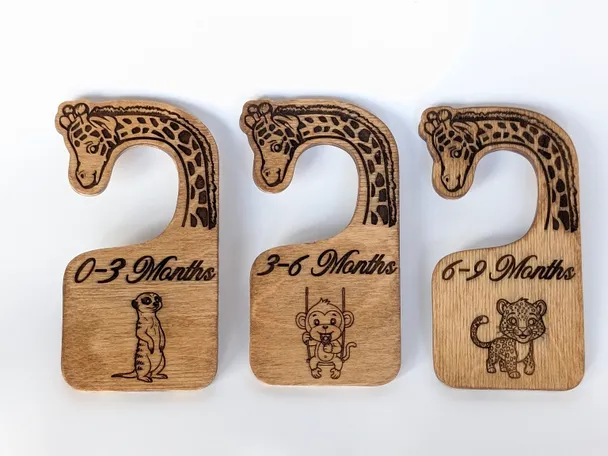
- Sort by size first, category second. Group every 0-3M piece together, then every 3-6M piece, rather than grouping all onesies in one spot and all pants in another. When a size stops fitting, you're pulling one section, not hunting through the whole closet.
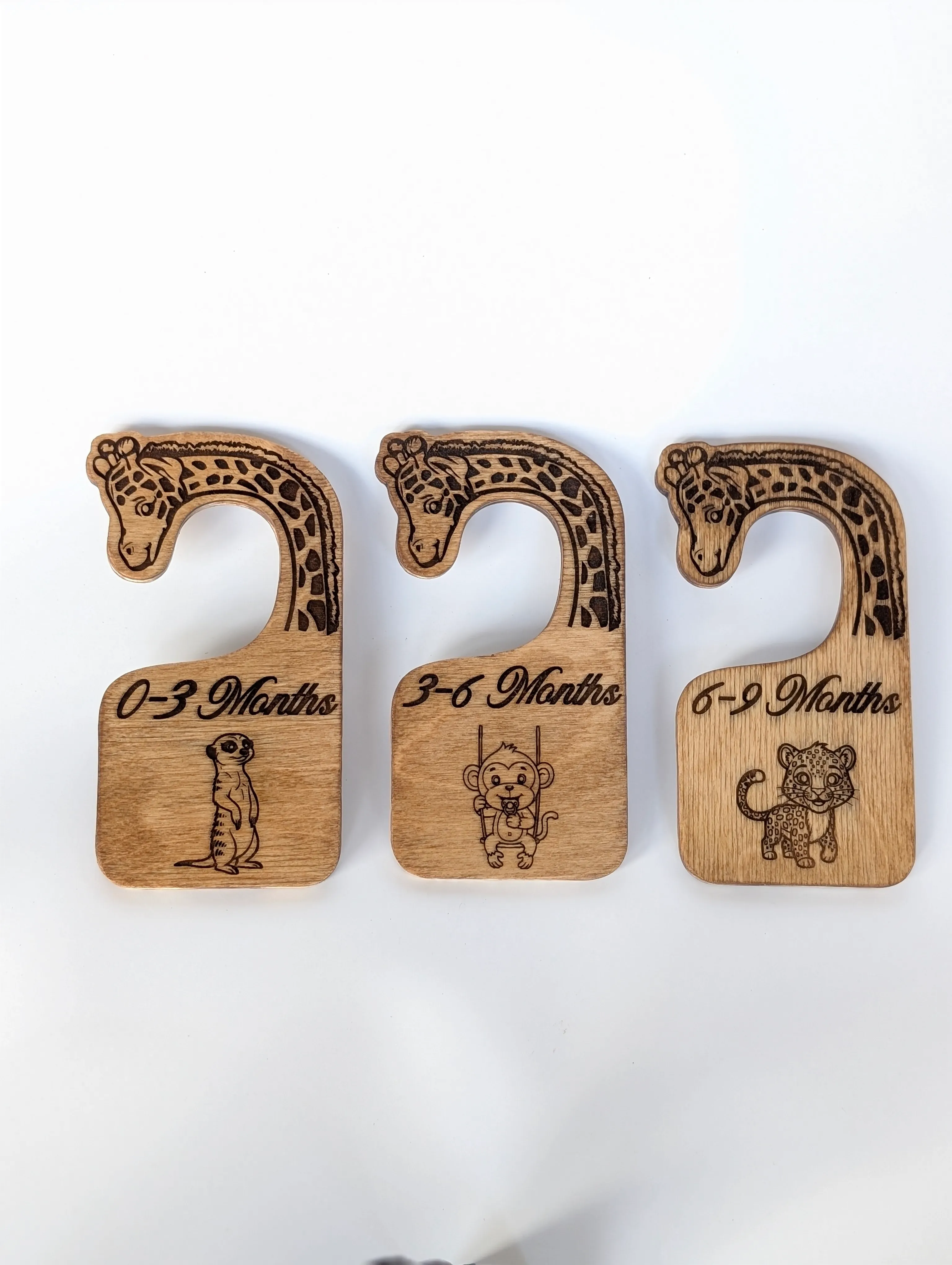
- Label the rod, not just the bin. A label on the hanging rod itself, something like a set of size-marked closet dividers, means anyone reaching into the closet can tell where one size ends and the next begins without reading a tag on every hanger.
- Keep the next size up within reach. A bin of the next size on a closet shelf beats a bin taped shut in the attic. Growth spurts don't wait for a convenient weekend to dig through storage.
- Move outgrown clothes out on a schedule. Pick a day, the first of the month works for a lot of parents, and move anything that no longer fits into a donate or hand-me-down bin. Waiting until the closet is too full to close usually means it never happens.
Why sorting by size saves time at every outfit change
A nursery closet that is not sorted by size looks fine from the doorway and costs time at each outfit change, every day of the first two years. Whoever's doing the 2 a.m. change or the daycare drop-off rush feels it most, and it's rarely the same person twice in a row. It might be a partner or a grandparent. A system that reads at a glance, an animal or a color per size rather than a printed number, works for whoever's in the closet that day, not just the person who set it up.
It's also a natural thing to set up before the baby shower rather than after. Guests often buy clothes across every size, since nobody can predict exactly what a baby will need and when, and a closet that's already organized by size means those gifts have a home the moment they're unwrapped instead of piling up in a laundry basket.
Sizing Questions
Why do the size labels skip around instead of going in neat order?
Sizes overlap on purpose. A baby who's tall for their age might still be in 3-6M at four months while a smaller baby has moved to 6-9M. Try the outfit before you commit to a size, and expect to keep two adjacent sizes in rotation for a few weeks during any transition.
Should I buy ahead in the next size up, or buy as I go?
A little of both works better than either extreme. Buying everything ahead means a chunk of it never gets worn if your baby grows faster or slower than the chart predicts. Buying nothing ahead means a 2 a.m. scramble when the current size stops fitting. A workable middle: keep one size ahead on hand and shop the rest as it becomes clear which way your baby is trending.
Do closet dividers actually save time, or is that overselling it?
It depends on how often the closet gets touched. If one person does all the laundry and already knows the system, dividers save less. If more than one person handles outfit changes, especially in the middle of the night or when a grandparent is helping out, a labeled divider means nobody has to guess or ask.
What if I get gifted clothes in a size chart I don't recognize?
Some brands run their own sizing, especially European labels that use centimeters or month ranges that don't line up with US NB through 24M conventions. When that happens, sort by the garment's actual measurements against your baby's current weight and height rather than trusting the printed size. A divider set organized by US standard sizing still works, you just place the odd-sized piece where it actually fits, not where the tag says it should go.
Ready to sort the closet once and be done with it?
Our safari nursery closet dividers sort newborn through 24 months, plus sleepers, swaddles and outerwear, by animal instead of by number, laser-engraved into Baltic birch and made to order in our Denver studio. We send a free proof within 24 hours of your order, start cutting once you approve it, and ship in 3 to 5 business days after that.